[CASE STUDY] Transforming Organizational Culture

by Jun 10, 2021

Organizational culture is the heartbeat of any company, shaping its identity, influencing its success, and defining the employee experience. As businesses evolve in an ever-changing landscape, the need to adapt becomes paramount. Transforming organizational culture isn’t just a buzzword; it’s a strategic imperative for survival and sustained growth.

Understanding Organizational Culture

Organizational culture is the set of shared values, beliefs, and behaviors that shape how work gets done within a company. It’s the invisible force that guides decision-making, employee interactions, and overall organizational performance. To transform a culture, one must first understand its current state, identifying both strengths and areas for improvement.

The Need for Transformation:

Why does an organization embark on the challenging journey of culture change? The reasons vary, from responding to market shifts and technological advancements to fostering innovation and attracting top talent. Perhaps a company seeks to recover from a crisis, or it recognizes the importance of diversity, equity, and inclusion in today’s global business landscape. Whatever the catalyst, the transformation is a commitment to a new way of doing things.

Leadership’s Role:

Culture transformation begins at the top. Leaders must champion the change, embodying the desired cultural traits and inspiring others to follow suit. This involves not only communicating the vision but actively living it. Leaders become the architects of change, setting the tone for the entire organization.


CASE STUDY

We recently put together a case study regarding one of our clients, Rainbow Municipal Water District (RMWD), and thought we’d share it in case you were looking for ideas on improving your own workplace culture.
The HR Manager and Executive Director came into a negative culture when they started at RMWD, where behavior was already out of control and clear signs of distrust existed. Because they paid attention to the subtle signs that something was brewing, they knew change was needed.

OUR TRAINING

Civility Partners was engaged to deliver training around civility and allyship, and due to comments received during the training, RMWD decided a climate assessment was in order. Once we completed our tailored and custom assessment (we always do them that way), we worked with RMWD to develop a plan of action.
Some items on the strategic plan included leadership coaching, working with a specific department to address a culture of bullying, implementing a company-wide newsletter, more frequent one-on-one’s so that managers could stay on top of employee needs, company-wide training and a written guide to facilitate better one-on-one’s, and a whole lot of transparency.
The results of our second survey – conducted two years later in 2020 – showed that all of RMWD’s hard work paid off. For example, when asked to rate the statement, “I’m inspired to do my best as often as I can when I’m at work,” we saw a 100% positive response! Now that’s employee engagement right there – 100% of employees giving maximum discretionary effort as often as possible.
Annnddd… their net promoter score (NPS) went from 80% to 96%! Wow. (NPS refers to the likelihood that your workforce would recommend your organization to others as a good place to work.)
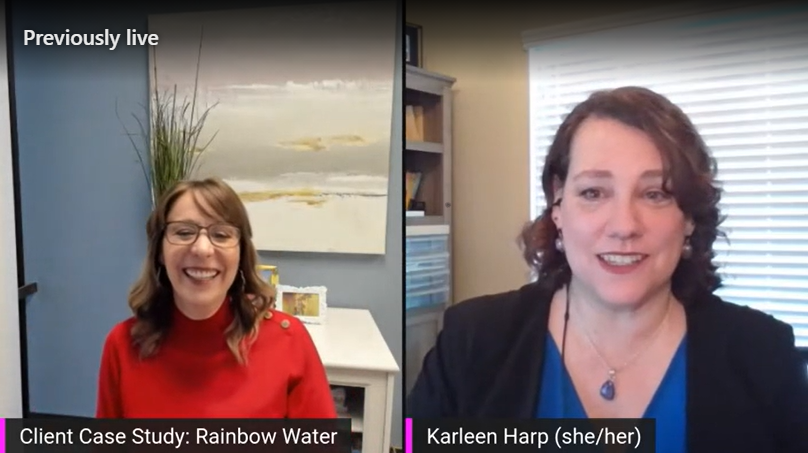
For more insight regarding RMWD’s action plan, take a peek at the full case study on our website and check out this 6 minute conversation with Karleen Harp, the HR Manager who made it all happen.
https://campaign-image.com/zohocampaigns/446278000018141006_zc_v13_1622759775606_screenshot_2021_06_03_153131.png
You can also watch/listen to our entire 30-min conversation here. Karleen explains more about what inspired her to seek outside help, the various action items RMWD engaged in, and how she led the organization through a culture transformation.
Sincerely,
Catherine & The Civility Partners Team

About Catherine Mattice

Catherine Mattice, MA, SPHR, SHRM-SCP is President of consulting and training firm, Civility Partners, and has been successfully providing programs in workplace bullying and building positive workplaces since 2007. Her clients include Fortune 500’s, the military, several universities and hospitals, government agencies, small businesses and nonprofits. She has published in a variety of trade magazines and has appeared several times on NPR, FOX, NBC, and ABC as an expert, as well as in USA Today, Inc Magazine, Huffington Post, Entrepreneur Magazine, and more. Catherine is Past-President of the Association for Talent Development (ATD), San Diego Chapter and teaches at National University. In his book foreword, Ken Blanchard called her book, BACK OFF! Your Kick-Ass Guide to Ending Bullying at Work, “the most comprehensive and valuable handbook on the topic.” She recently released a second book entitled, SEEKING CIVILITY: How Leaders, Managers and HR Can Create a Workplace Free of Bullying.

“Job Hugging” & 4 Ways to Respond

Nearly 48% of employees say they are staying in their jobs longer than they otherwise would for stability and security, and about 75% expect to remain in their roles for the next few years. At the same time, voluntary quit rates have dropped to around 2%, one of the...

Workplace Red Flag: “We’re Like a Family!”

Have you ever worked in, or heard someone mention, a workplace that prides itself on being like a family, or family-oriented? “We treat each other like family here,” they say.  People mean it as a signal of care, loyalty, and belonging. But calling your workplace a...

Unpopular Opinion: “Open Door Policies” are Just for Show

Most employees don’t feel safe speaking up at work. In fact, research consistently shows that a significant portion of employees, often more than half, hold back concerns, ideas, or feedback because they fear negative consequences. And yet, ask almost any organization...

Employees Afraid to Discuss Work Toxicity?

I just returned from the Ohio Safety Conference (OSC), where I spoke about Why Safety Fails Without Culture & Behavior. In addition to my session, we hosted a booth where we handed out some swag, including copies of my book, Navigating a Toxic Workplace For...

Should HR Come as a Pair? Compliance vs. Strategic HR

Have you ever noticed how small most HR teams are in comparison to everything they’re expected to do? In many organizations, HR makes up only about 2% of the workforce. Yet they’re responsible for the business’ most valuable asset - PEOPLE. That means culture and...

AI Prompts for Busy HR and Leaders Building Civil Cultures

You don’t struggle creating and managing a positive culture because you don’t care about it. You struggle because you don’t have the time. Between performance issues, leadership coaching, hiring, compliance, and “one more urgent fire,” culture work often gets pushed...

An Important Survey Question You’re Not Asking

Employee Appreciation Day is March 6th here in the United States, and with it often come social events, catered lunches, swag bags, and gift cards. It’s kind of annoying, if you ask me.  Not because you shouldn’t appreciate your people, but because leaders are fairly...

Hear From the Experts: What Really Happens in Upstander Training

We can tell you that our Upstander Training Toolkit really works in our emails. But the most powerful proof comes from our expert facilitators who deliver this very same training to our own clients. Dr. Toni Herndon and Dr. Bob Berk have facilitated this program to...

Why Organizations Create Toxic Rockstars (And How to Stop Them)

Research shows that more than 70% of employees report experiencing incivility or disrespectful behavior at work, and over half say these behaviors reduce their productivity and morale. Meanwhile, almost every HR or people leader has heard some version of these...

7 Questions to Answer Before Launching a Training Program

Organizations spend a staggering amount on training, yet the results often fall short.  In the United States alone, organizations invested $102.8 billion in training in 2025, up from $98 billion in 2024, yet research consistently shows that only 10–20% of training...